


Books that keep themselves
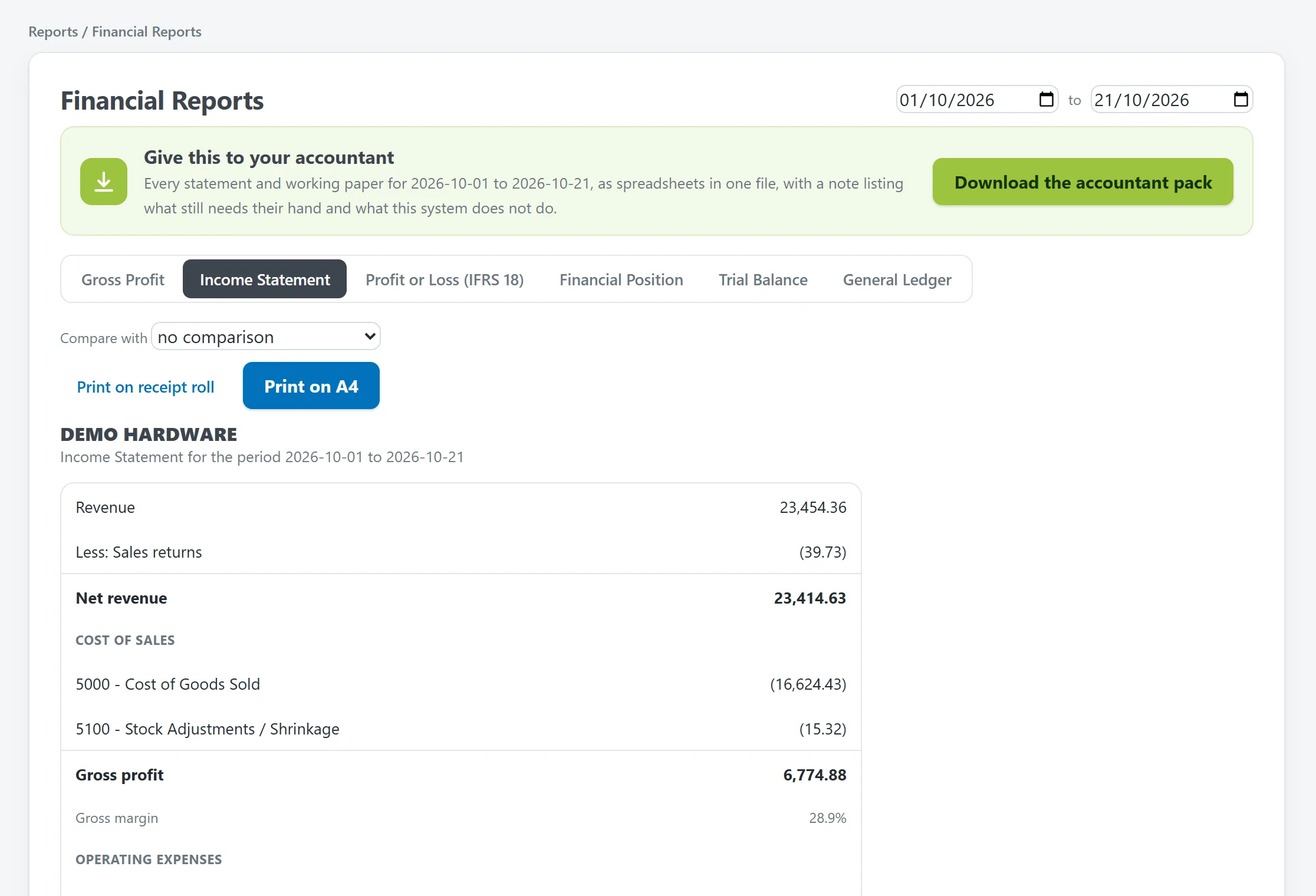
Every sale, delivery, expense and payslip is posted in double entry the moment it happens. At month end there is nothing to type in: the statements, the VAT return and the tax computation are already there.

Statements any accountant recognises
Gross profit, the income statement, profit or loss as IFRS 18 lays it out, the statement of financial position, the trial balance and the general ledger, for any period, with a comparison if you want one.
Bank reconciliation
Import the bank statement and match it to the cash book, so what the bank knows and what the books know come to the same figure.
Fixed assets
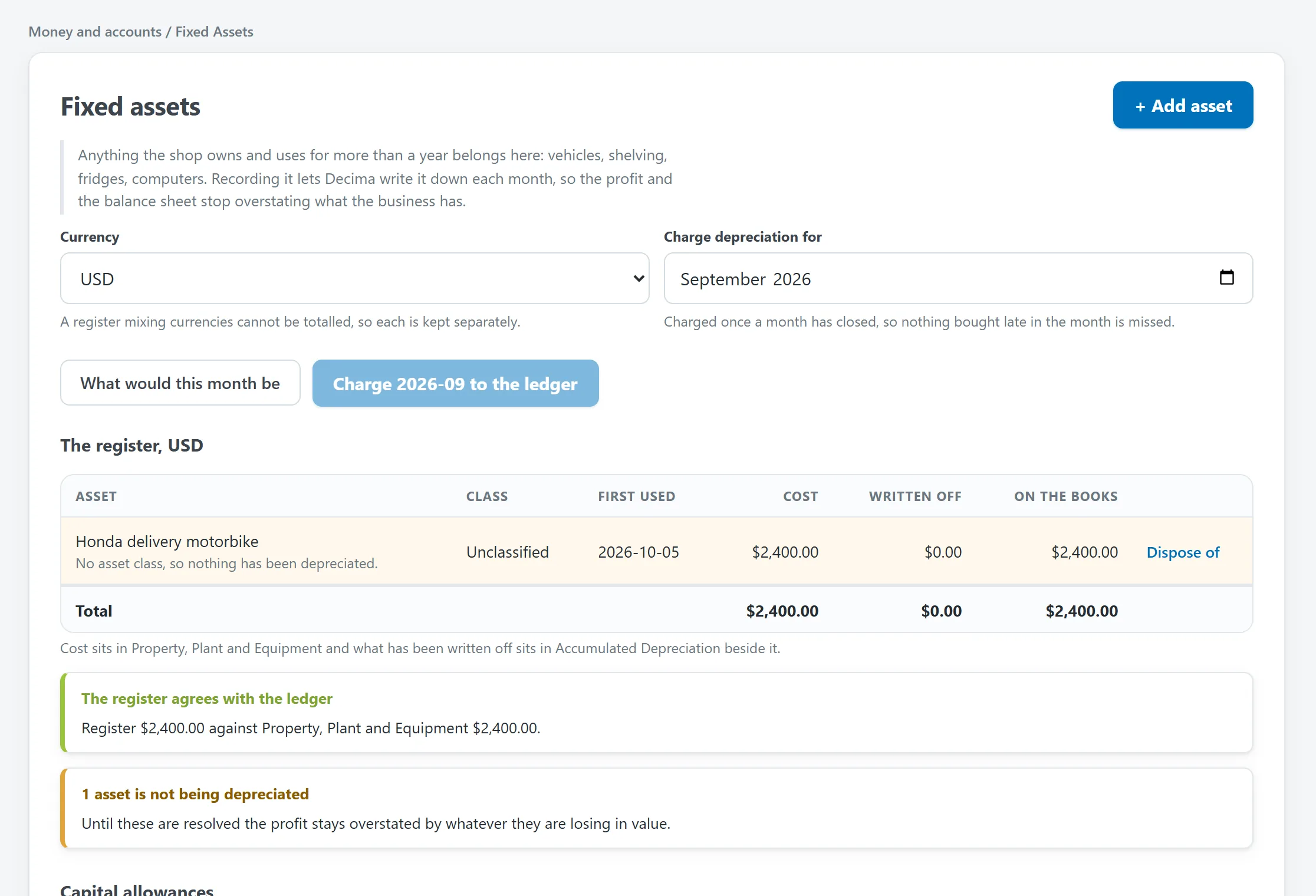
A register of what the business owns, depreciation charged month by month, and capital allowances worked beside it.
Two currencies
Every figure in US dollars and ZWG, with currency revaluation at month end.
The VAT return and its schedules
For any period and currency: output tax from fiscal invoices and credit notes, input tax only where a tax invoice supports it, and the schedules your accountant needs.
- Standard rated, zero rated and exempt kept apart from the first sale
- Input VAT refused where the supplier gave no valid tax invoice
- VAT Watch on Glance counts taxable sales against the US$25,000 threshold
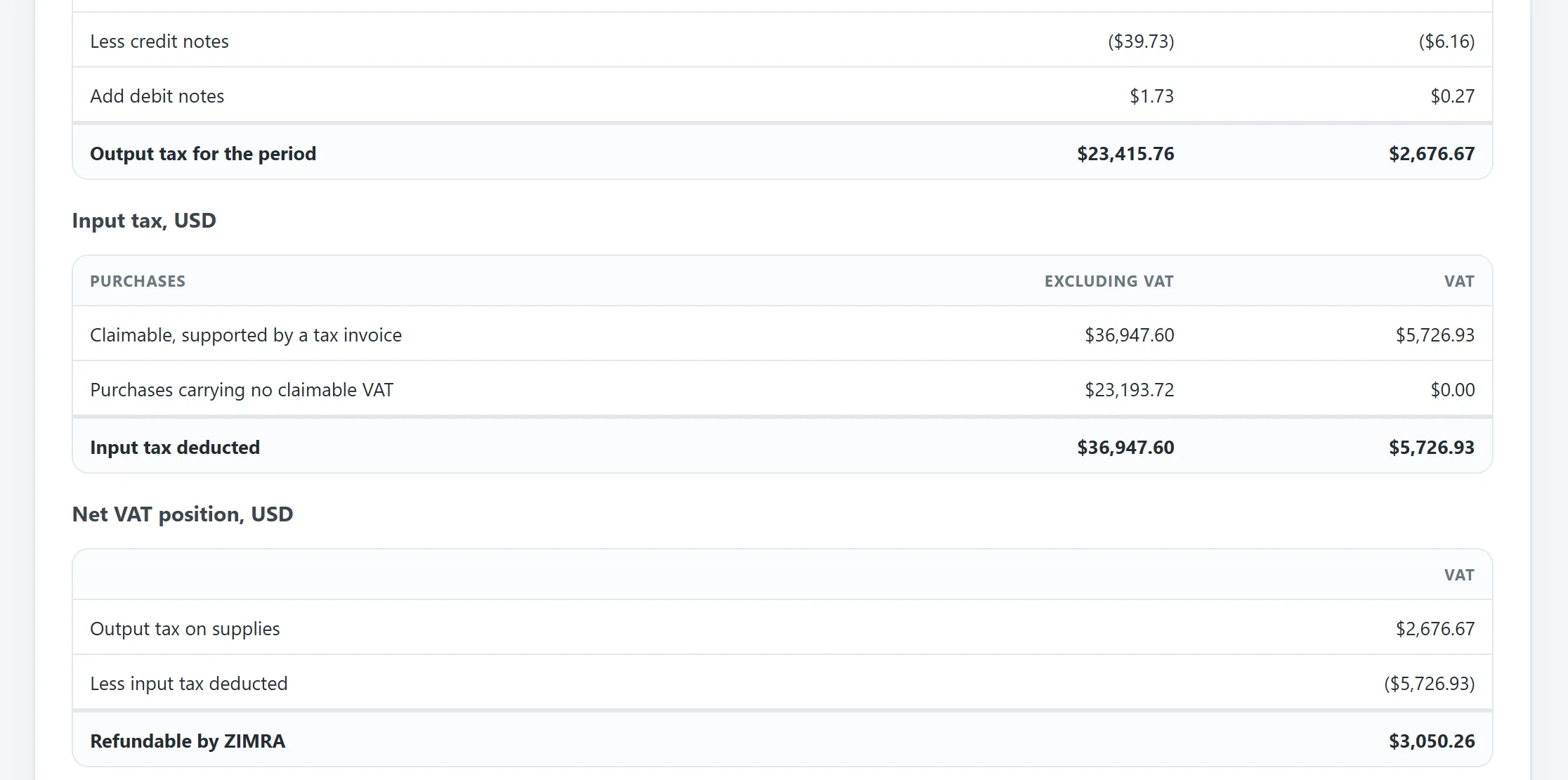
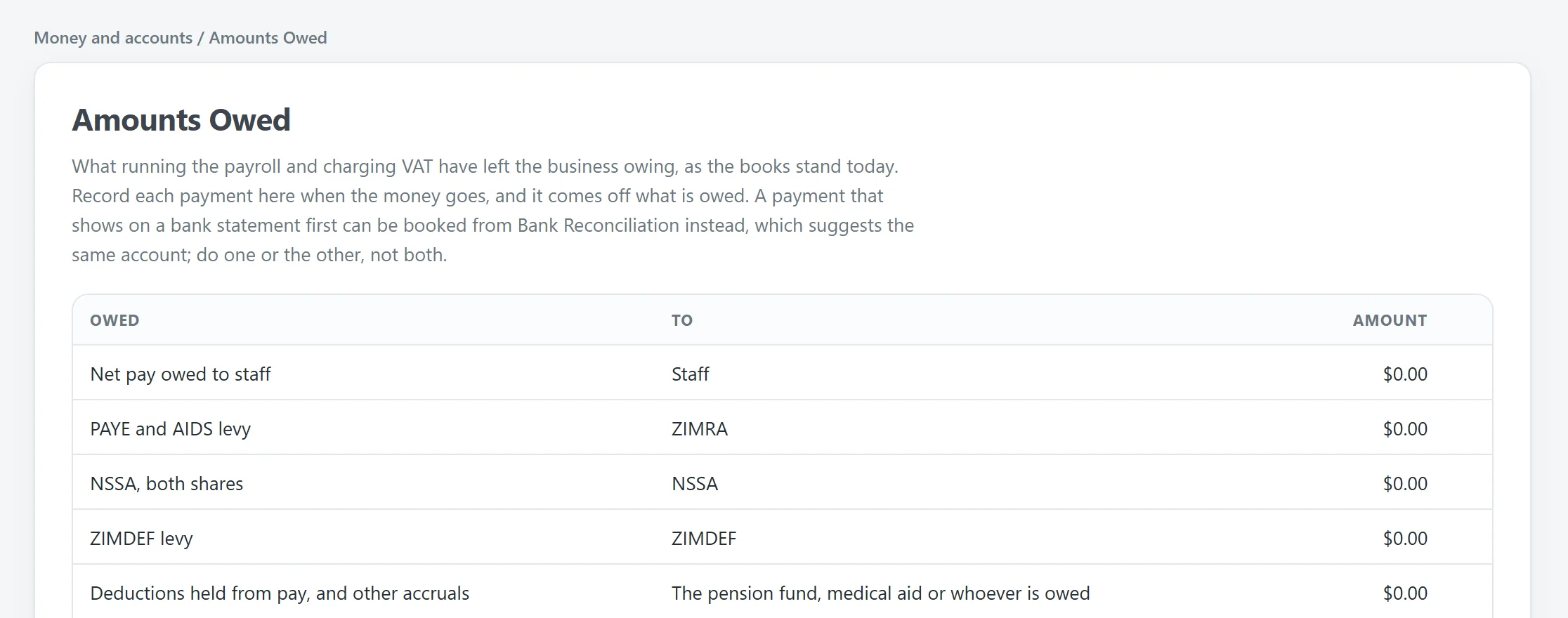
Know what you owe before ZIMRA asks
The income tax computation adds back what the law disallows and works the quarterly payments due. Amounts Owed lists every tax and deduction still to be paid, and who to.
A register that agrees with the ledger
Show your accountant the books it keeps
Bring your accountant to the demonstration. The books are theirs to examine, and they open straight into Decima Practice.